

That split second when you round the curve on Highway 96 and the autumn sun hits your windshield just right can completely blind you. For Franklin and Williamson County drivers, this isn’t just an inconvenience—it’s a serious safety hazard that leads to hundreds of seemingly minor rear-end collisions every fall. What makes these fender-benders particularly deceptive is that the bumper cover often looks perfectly fine after impact, maybe just a small scuff. The real damage is happening behind that plastic cover, where critical safety systems and absorption materials are quietly failing. At Cool Springs Collision Center, our I-CAR Gold certified technicians see this pattern repeatedly during autumn months, and the hidden consequences can put your family at risk when winter weather arrives.
The “Blind Drive” Phenomenon: How the Fall Equinox Hits Franklin Drivers
During the fall equinox period around September 22nd, the sun rises and sets almost perfectly along an east-west axis. This creates particularly dangerous conditions for Franklin commuters on roads like Highway 96 and Murfreesboro Road, which run predominantly east-west through Williamson County. The problem intensifies because sunrise happens around 6:45 AM during this period—exactly when thousands of Franklin residents head eastbound toward Nashville for work, with the sun sitting low on the horizon at an angle that renders sun visors nearly useless.
According to AAA data, sun glare contributes to thousands of crashes annually, with the most dangerous period being the first 10 to 15 minutes after sunrise. For drivers heading west on Highway 96 during evening rush hour around 6:45 PM in early fall, the same blinding effect occurs as the sun sets. The National Highway Traffic Safety Administration notes that rear-end collisions account for nearly one-third of all crashes, and many happen during peak sun glare hours when depth perception becomes seriously compromised.
Beyond the Scratch: What Happens Behind Your Rear Bumper?
When someone taps your rear bumper at 5 to 10 mph in traffic—the typical speed for these sun glare collisions on Highway 96—you’ll often think you got lucky because the bumper cover looks intact. This is where the danger lies, because modern bumpers have a flexible outer cover that can absorb minor impacts and pop back into shape. What you can’t see is the Styrofoam energy absorber positioned directly behind that plastic cover, designed to crush on impact to protect the vehicle’s structure and occupants.
Here’s what actually happens: the outer bumper cover flexes inward, compressing the foam absorber behind it. That foam is engineered to deform permanently—it’s supposed to crush and stay crushed, sacrificing itself to dissipate energy. Once compressed, it loses virtually all protective capacity, meaning your bumper can no longer properly absorb energy in a subsequent collision. The technicians at Cool Springs Collision Center regularly document this “plastic memory” effect where the bumper cover returns to its original shape while the absorber material behind it remains compressed and useless.
Beyond the foam absorber, modern bumpers also house structural components like reinforcement bars that can bend or crack without visible external evidence. When these are compromised, your vehicle’s crash safety rating effectively plummets. During winter months in Franklin, when roads can get icy and multi-car pileups become more common, having a compromised bumper absorber means your vehicle won’t properly protect you in a secondary collision. Our specialized bumper repair services include comprehensive inspections that reveal this hidden damage before it becomes life-threatening.
The “New Car” Risk: Why ADAS Sensors Can’t Handle a Nudge
If you’re driving a vehicle manufactured after 2018, there’s a high probability that your rear bumper houses sophisticated radar and ultrasonic sensors that power your car’s Advanced Driver Assistance Systems, or ADAS. These systems include blind spot monitoring, rear cross-traffic alert, parking assist, and automatic emergency braking functions. The sensors are typically embedded in the corners of the rear bumper, positioned with millimeter-level precision to properly detect vehicles and obstacles around your car.
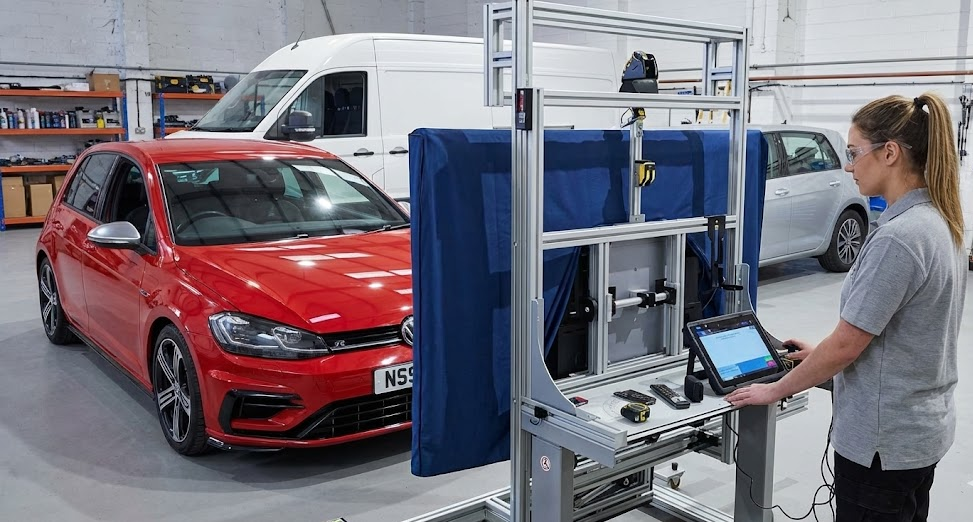
Here’s the problem: these sensors are incredibly sensitive to positional changes. Research on ADAS sensor performance shows that even removing and reinstalling an undamaged bumper cover without recalibration can cause blind spot monitoring to fail intermittently. When your rear bumper gets hit in a minor 5 mph collision, the impact can shift sensor mounting brackets or change the sensor angle. According to AAA’s technical guidance, a sensor misaligned by just one degree will be aimed significantly off-axis 50 feet down the road, rendering safety features completely ineffective.
The particularly insidious aspect is that your vehicle often won’t tell you there’s a problem. Modern cars don’t consistently trigger dashboard warning lights when sensors are slightly misaligned—they simply stop working correctly. You might notice your blind spot monitoring occasionally failing to detect vehicles, or parking sensors beeping erratically. These aren’t just annoying quirks—they’re symptoms of misaligned safety systems that won’t protect you when needed. Cool Springs Collision Center’s technicians specialize in re-calibrating sensitive safety sensors using manufacturer-specific protocols and precision equipment to restore your ADAS systems to factory specifications.
Why You Must Inspect Absorption Pads Before Winter Weather Strikes
Franklin’s winter weather brings ice storms, freezing rain on bridges, and cold snaps that catch drivers off guard on Highway 96 and I-65. Williamson County sees a significant uptick in multi-vehicle collisions during winter months when roads become slick, and this is precisely when you need your bumper’s energy absorption system functioning at full capacity. If you had a minor rear-end collision during fall and didn’t get the damage inspected, your vehicle is now essentially unprotected for winter driving.
Consider this: you’re driving from Cool Springs Galleria when freezing rain starts falling. Traffic slows on Highway 96, and your vehicle slides on black ice and taps the car ahead at 10 mph. Under normal circumstances, your bumper system would absorb this impact. But if your foam absorber was already crushed from September’s sun glare collision, it can’t do its job. The impact energy transfers directly through your bumper into your vehicle’s rear structure, potentially causing frame damage, trunk floor buckling, and even injury to rear passengers.
The Insurance Institute for Highway Safety’s research demonstrates that properly functioning bumper systems dramatically reduce both injury rates and repair costs in low-speed collisions. Vehicles with compromised bumper absorption materials suffer significantly more structural damage in secondary impacts, with repair bills escalating because what should have been a simple bumper replacement becomes complex structural repair. This is why our certified technicians strongly urge Franklin drivers who experienced any rear-end contact during fall to schedule a comprehensive safety inspection before winter, ensuring absorption pads and structural components are ready to protect you when road conditions deteriorate.
Common Hidden Damage from “Minor” Rear-End Collisions
Franklin drivers frequently underestimate the scope of damage from low-speed rear-end collisions, particularly those that occur during autumn sun glare conditions on Highway 96. Understanding what components are at risk helps you make informed decisions about inspection and repair:
- Crushed Energy Absorbers: The Styrofoam or honeycomb foam behind your bumper cover permanently compresses on impact, losing 80-90% of its protective capacity even when the outer cover looks perfect.
- Bent Reinforcement Bars: The steel or aluminum bar behind your bumper can bend or crack without external evidence, compromising your vehicle’s crash safety structure.
- Misaligned ADAS Sensors: Radar and ultrasonic sensors in bumper corners can shift by fractions of an inch, rendering blind spot monitoring and rear cross-traffic alert systems ineffective without triggering warning lights.
- Damaged Sensor Brackets: Mounting brackets that hold sensors in precise positions can bend or break, causing intermittent system failures that seem random but are collision-related.
- Stressed Bumper Mounting Points: The clips and brackets that secure your bumper to the vehicle frame can crack or loosen, causing the bumper to sit improperly.
- Compromised Wiring Harnesses: Electrical connections for sensors and cameras can be stretched or pinched during impact, leading to electrical issues that develop over time.
These hidden damages don’t announce themselves with dashboard warning lights or obvious symptoms—they quietly compromise your safety until you need that protection most. A professional inspection by I-CAR Gold certified technicians reveals these issues before they become dangerous or costly.
Understanding ADAS Sensor Locations and Functions
| Sensor Type | Typical Location | Primary Function | Impact Sensitivity |
|---|---|---|---|
| Rear Radar Sensors | Rear bumper corners (left & right) | Blind spot monitoring, rear cross-traffic alert | Very High – 1 degree misalignment affects detection |
| Ultrasonic Sensors | Embedded in rear bumper cover | Parking assist, distance detection | High – Physical damage common in minor impacts |
| Rear Camera | Trunk lid or bumper center | Backup visibility, trajectory lines | Moderate – Requires recalibration if mount shifts |
| Rear Sonar Array | Lower bumper fascia | Low-speed collision avoidance | High – Sensitive to bumper position changes |
Note: Sensor configurations vary by vehicle make, model, and year. Modern vehicles often combine multiple sensor types for comprehensive ADAS coverage.
FAQs
Q: My bumper looks fine after a rear-end collision; why do I need an inspection?
A: Modern bumper covers are designed with “plastic memory” that allows them to flex during impact and return to their original shape. However, the Styrofoam energy absorber behind that cover is engineered to crush permanently during collision, sacrificing itself to protect you. Once crushed, it stays compressed and loses virtually all protective capacity for future impacts, even though the outer cover looks perfect.
Q: Can a minor bumper tap affect my blind spot monitoring?
A: Absolutely. Modern vehicles house radar sensors in the corners of the rear bumper, and these sensors require millimeter-level precision to function correctly. Even a 5 mph impact can misalign sensor mounting brackets or shift sensor angles by a fraction of a degree, rendering blind spot monitoring and rear cross-traffic alert systems completely ineffective without triggering warning lights.
Q: Will insurance cover a bumper repair if there is no visible paint damage?
A: Yes, insurance companies typically cover bumper repairs when a professional inspection reveals internal damage to absorption materials, reinforcement structures, or compromised safety systems, even if there’s no visible cosmetic damage. Cool Springs Collision Center works directly with all major insurance carriers as a Direct Repair Facility to streamline your claim.
Q: Why is sun glare worse in Franklin during the Fall?
A: During the fall equinox period around September 22nd, the sun rises and sets almost perfectly along an east-west axis, aligning directly with major Franklin corridors like Highway 96 and Murfreesboro Road. This alignment, combined with the sun’s low angle during morning and evening rush hours, creates blinding glare that seriously impairs visibility for drivers, making rear-end collisions significantly more likely.
Q: How long does ADAS sensor calibration take after bumper repair?
A: ADAS calibration timing varies depending on your vehicle’s specific systems. Most calibrations take between 1 to 3 hours using specialized equipment and manufacturer-specific procedures. Our technicians use precision calibration tools to ensure all safety systems meet factory specifications.
Schedule Your Pre-Winter Safety Scan in Franklin, TN
Don’t let hidden bumper damage put your family at risk this winter. If you’ve been tapped in traffic during Franklin’s challenging autumn sun glare season, the damage likely goes deeper than the paint. The I-CAR Gold and ASE certified technicians at Cool Springs Collision Center provide comprehensive safety inspections that reveal crushed energy absorbers, bent reinforcement structures, and misaligned ADAS sensors before they become dangerous problems on icy winter roads.
With over 5,000 vehicle collisions occurring annually in Williamson County, and many rear-end impacts happening during sun glare conditions, your bumper system may have sustained hidden damage. Our state-of-the-art collision center uses computerized damage diagnosis and Toyota-certified repair protocols to restore your vehicle to factory specifications. Plus, we handle everything with your insurance company as a Direct Repair Facility for all major carriers, making the process fast and stress-free.
Book a safety inspection online today and ensure your sensors and structural absorbers are ready for whatever Franklin’s roads throw at you!
Or visit us at 1124 Murfreesboro Rd. Franklin TN 37064 and let our expert technicians protect what matters most—your family’s safety on the road. We’re here to provide honest, transparent inspections and quality repairs backed by our lifetime warranty on all collision repair work.